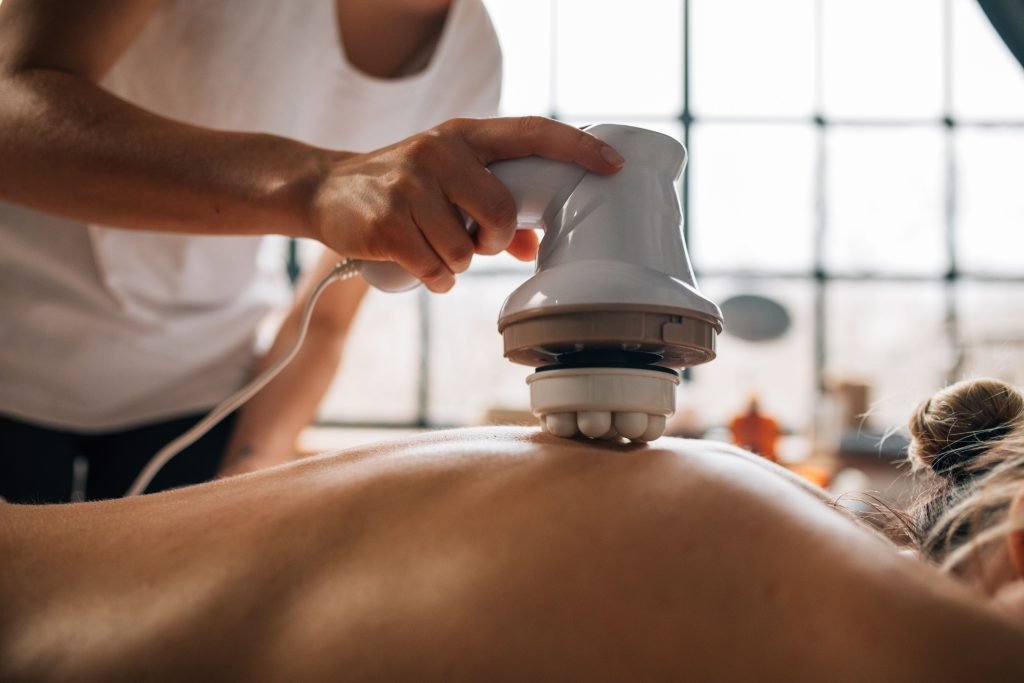
A Buyer’s Guide to Heated Massage Devices: What “Heat Function” Actually Means
‘Heat function included’ could mean a basic wire depending on an external thermostat with built-in lag, or a ceramic element that shuts off its own heat instantly at a set point — worth checking the spec sheet and reviews specifically, since the listing photo alone won’t tell you which one you’re getting.
Scroll through any heated massager listing and you’ll see the same phrase every time: “heat function included.” That phrase tells you almost nothing about how the heat is actually made or how well it’s controlled — and those are real, checkable questions, not vague marketing fluff.
Two Different Technologies Hiding Behind the Same Phrase
Basic heating wire makes heat at a rate that depends only on the voltage and the wire itself, with nothing built in to stop it — control depends entirely on a separate thermostat sensing temperature and switching power. That’s a “measure, then react” system, and it always has a bit of lag, which in a small handheld device with limited mass to smooth things out shows up as a bigger real-world temperature swing than the number on the box suggests.
Ceramic heating elements work completely differently — the limit is baked into the material, not sensed and reacted to. Picture the ceramic as built from countless tiny grains, with electricity crossing the boundary between each one — like a huge maze of tiny gates. Below a certain temperature, those gates stay open. Cross that temperature, and they clamp almost shut within just a few degrees, resistance jumps by a huge factor, and heat output collapses right along with it — instantly, with no lag, because there’s no separate sensing step to wait on.
This falls under what’s called constant heating in industrial heater terms — same self-regulating idea, scaled way down to a handheld device’s low power level.
Questions Worth Asking Before Buying
- Does the spec sheet say “PTC” or “ceramic heating element” specifically, or just “heat function” with no detail on the underlying tech?
- Is there a stated maximum temperature, and does it land in a comfortable, commonly cited safe range — usually somewhere around 40–45°C for extended skin contact?
- Do reviews mention holding steady warmth through a whole session, or complaints about hot spots and noticeable temperature drift?
Why Reviews Beat the Spec Sheet Here
Heat consistency is hard to show off in a product photo or a quick demo video, which is exactly why most listings and review content skip it in favor of easier things to film, like percussion strength. Reviews that specifically mention whether warmth held steady over 15–20 minutes of use are a much more reliable signal than the listing copy alone.
Why This Is Worth the Extra Digging
A wire-and-thermostat device isn’t necessarily dangerous, but it’s a genuinely different, less predictable experience than a ceramic device — and for something pressed against skin repeatedly over months of use, that predictability is a real quality difference, not a minor technical footnote.
For manufacturers building this category of device, component suppliers like PTCWORKS produce the low-power ceramic elements this technology depends on, built specifically so extended skin-contact heat therapy stays genuinely predictable rather than just “warm.”
Frequently Asked Questions
What’s the real difference between the two heating technologies?
A basic wire needs a separate thermostat to sense and react to temperature, with built-in lag. A ceramic element’s temperature limit is simply part of what the material is, reacting instantly with no separate sensing step.
Why are reviews more useful than the spec sheet for checking this?
Steady heat is hard to show off in a product photo or a short demo, so most listings skip mentioning it. Reviews that specifically say the warmth held steady over 15-20 minutes are a much better signal.
What temperature range is generally considered safe for skin contact?
Around 40-45°C is commonly cited as a comfortable, safe range for extended contact — worth checking a product states a specific number rather than a vague ‘heat setting.’